Therapeutic Bandages for Diabetic Foot Ulcers
Therapeutic-loaded hydrogel bandages for the treatment of chronic wounds in diabetic patients.
Medical Device
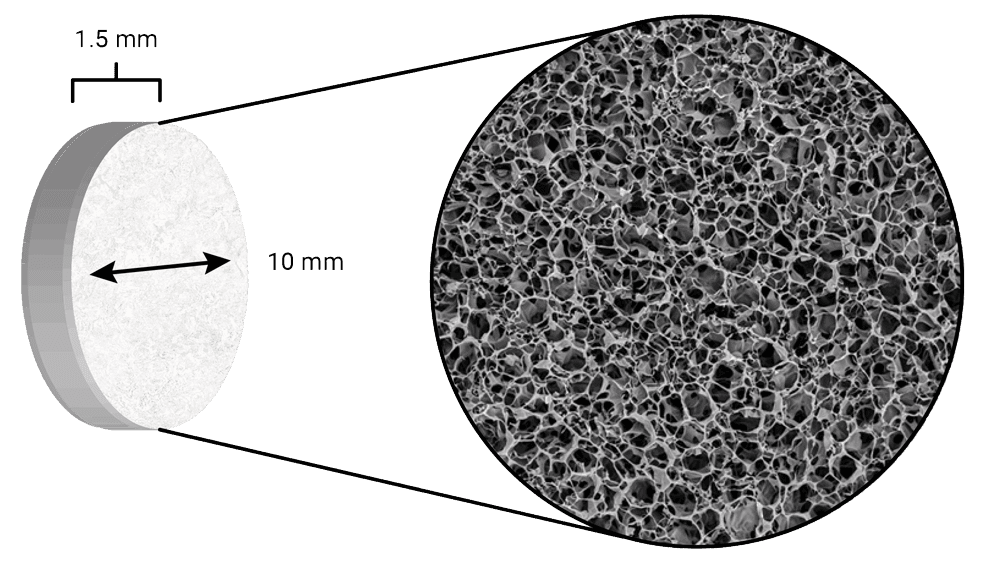
ROLE
Product R&D
Problem
Diabetes impairs the body's ability to properly produce or respond to insulin, leading to a variety of health complications. These include a 25% lifetime risk of developing a diabetic foot ulcer (DFU), a non-healing wound that often leads to lower limb amputations. Current treatments are often insufficient in healing and preventing the recurrence of DFUs.
Solution
Develop therapeutic bandages to enhance the treatment of DFUs by targeting their impaired healing mechanism.
Impact
This project laid further groundwork in the investigation of using hydrogels loaded with either MCP-1 or Substance P as a potential treatment for patients suffering from DFUs.
An Impaired Healing Mechanism
There are two types of macrophages primarily involved in the wound healing process—M1 and M2 macrophages.
M1 Macrophages – pro-inflammatory
M2 Macrophages – pro-healing
Patients suffering from diabetic foot ulcers struggle due to an impaired healing mechanism where there is an abundance of M1 macrophages and a lack of M2 macrophages.
Our Goals
Recruit macrophages to the wound site.
Polarize the macrophages to a pro-healing (M2) state.
Process
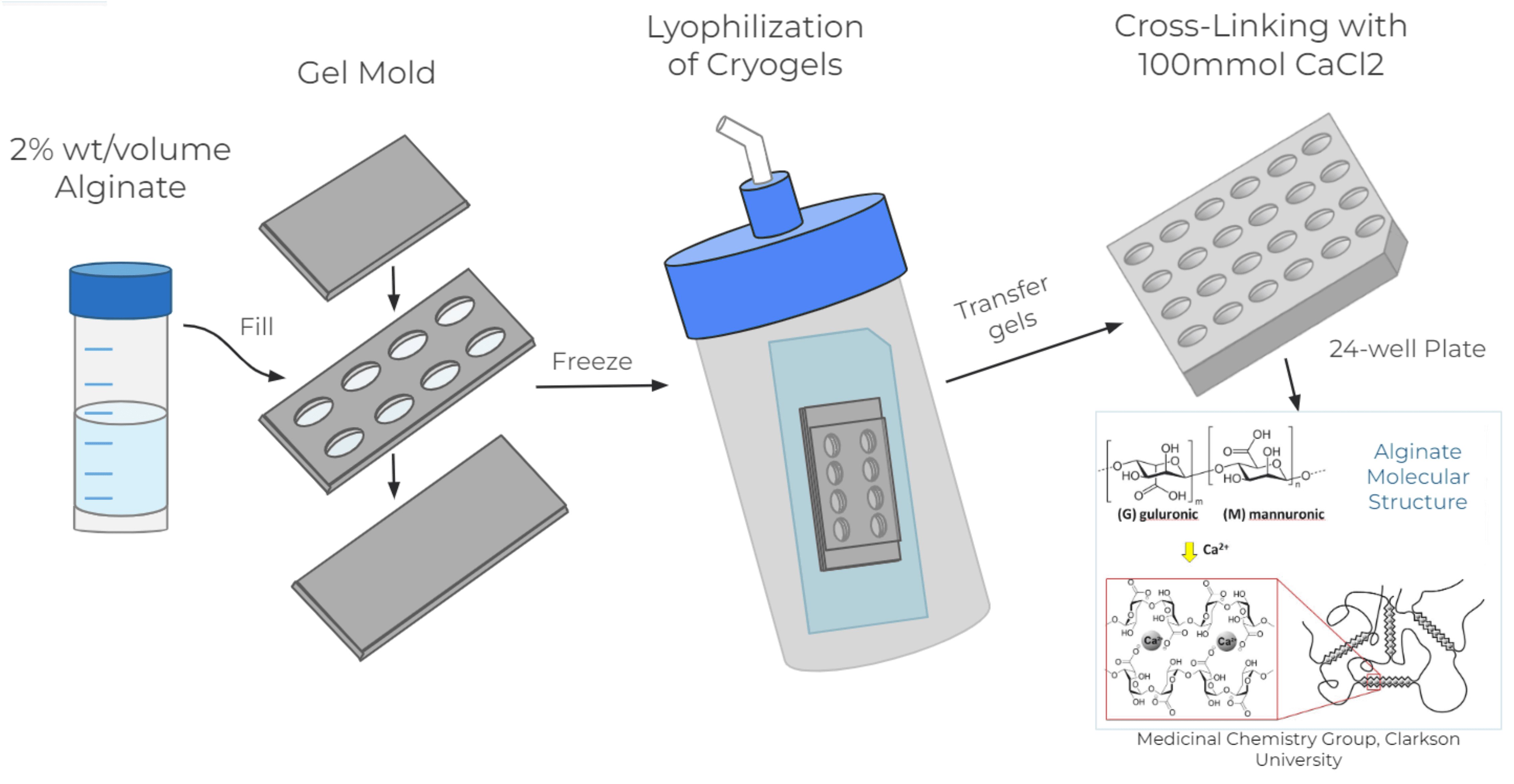
Process of making the hydrogels: making the alginate solution, filling molds with the solution, lyophilization, and cross-linking with CaCl2
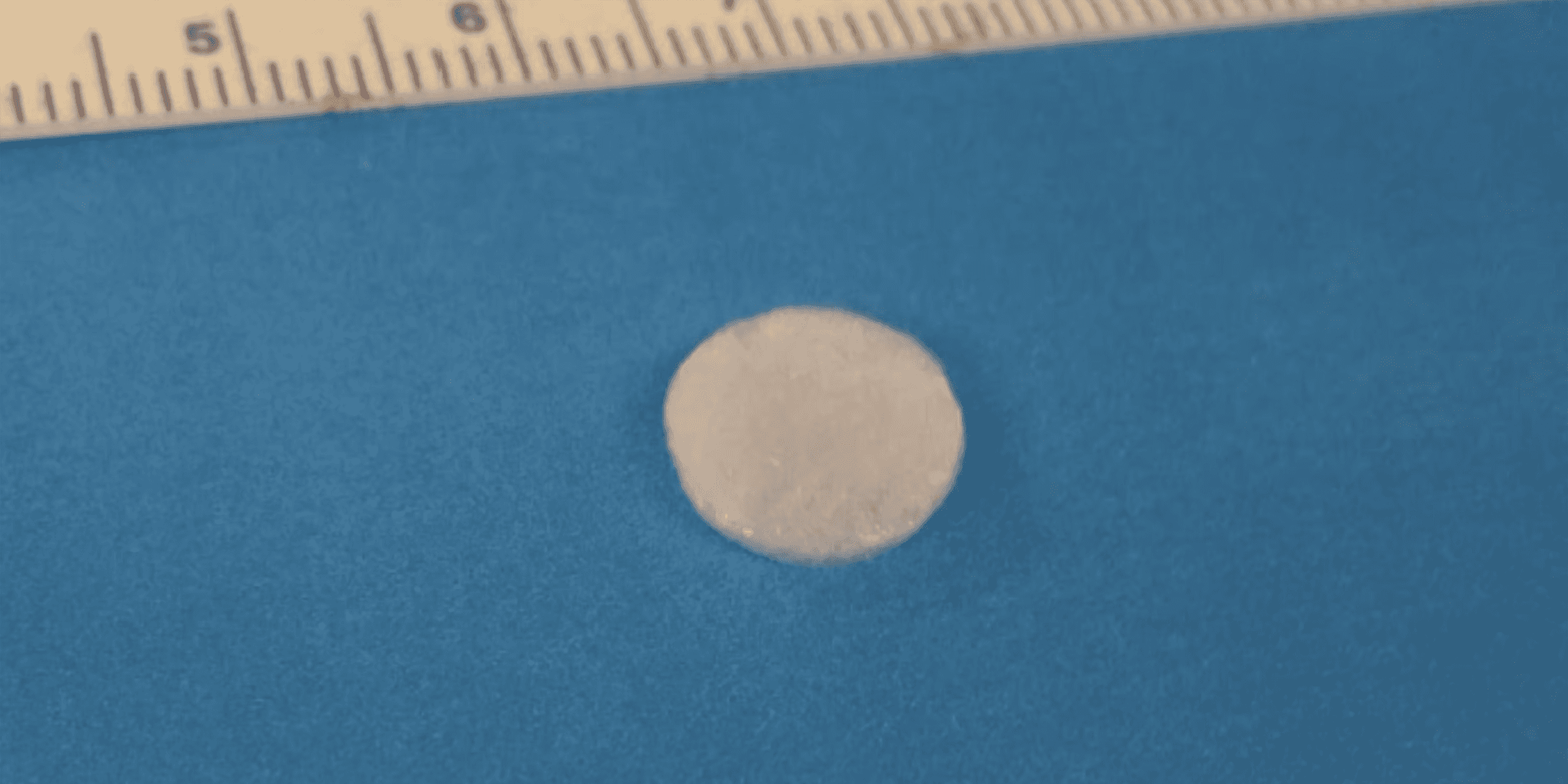
Image of a hydrogel post-lyophilization
Therapeutics Tested
Monocyte Chemoattractant Protein-1 (MCP-1)
Beneficial for the recruitment of monocytes and macrophages.
Substance P
Beneficial for the recruitment of macrophages and their polarization to an M2 (pro-healing) state.
Experimental Methods
The release kinetics of the therapeutic factors were analyzed via enzyme-linked immunosorbent assays (ELISA), and the release profiles of Substance P and MCP-1 from the bandages were optimized to be above the therapeutic levels for both factors at 1.5 μg/ml and 60 ng/ml, respectively, over a 10-day period.
The bandages were tested using a mouse model to assess their capability for wound healing based on two factors: (1) the size of wounds after 5 days and (2) the cell types recruited via fluorescence-activated cell sorting (FACS).
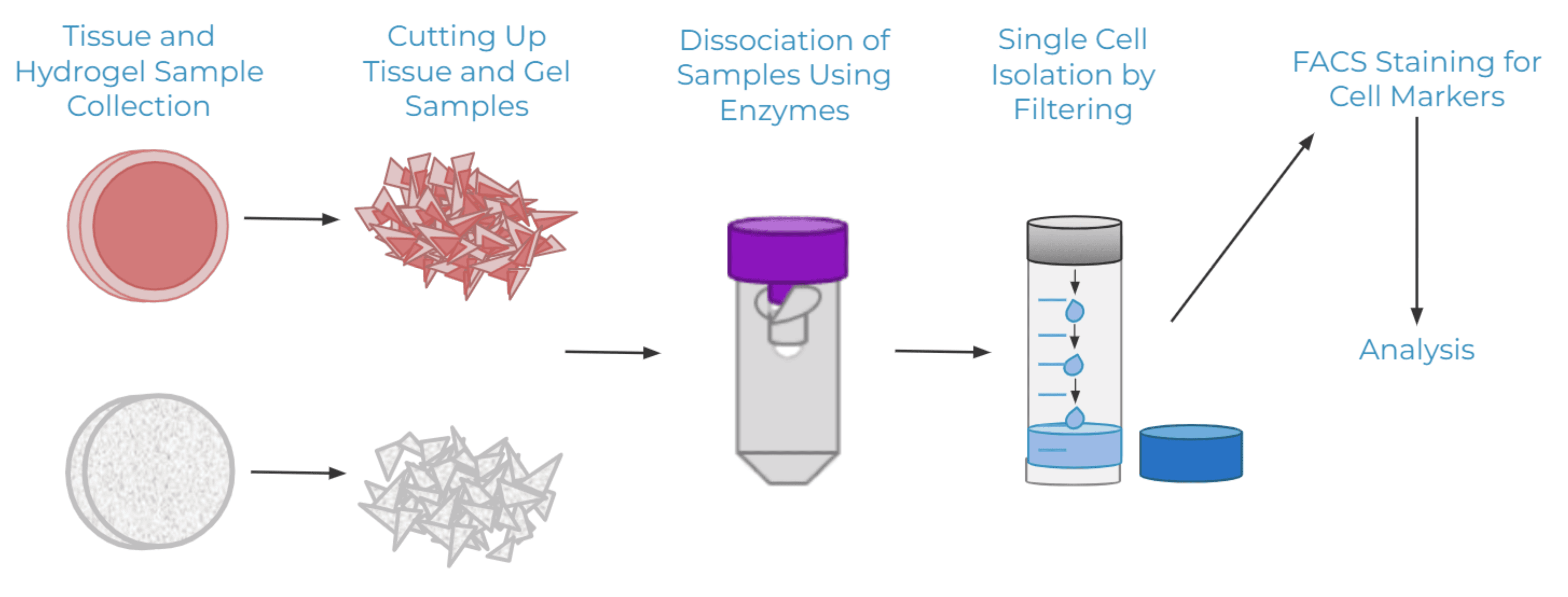
Analysis process of the animal study
Takeaways
In the release kinetics study, drug release profiles were in the therapeutic range for both MCP-1 and Substance P gels.
In the animal study, an increased number of immune cells were recruited by MCP-1 gels compared to pure alginate gels.
Of the immune cells recruited, more macrophages tended to be recruited.
Of the macrophages recruited, they were primarily of M2 type (pro-healing). This was expected, as the mice we used in this preliminary study were not diabetic mice and thus did not suffer from the same impaired healing mechanism.
Future Steps
Continue to work on immune cell recruitment.
Move on to polarization studies to see if M1/pro-inflammatory macrophages can consistently be polarized to a M2/pro-healing state.
Complete animal study with diabetic mice model.