Heart Valve Coaptation Mapping Device
A device to better quantify mitral valve function.
Medical Device
ROLE
Product R&D
UI/UX
Problem
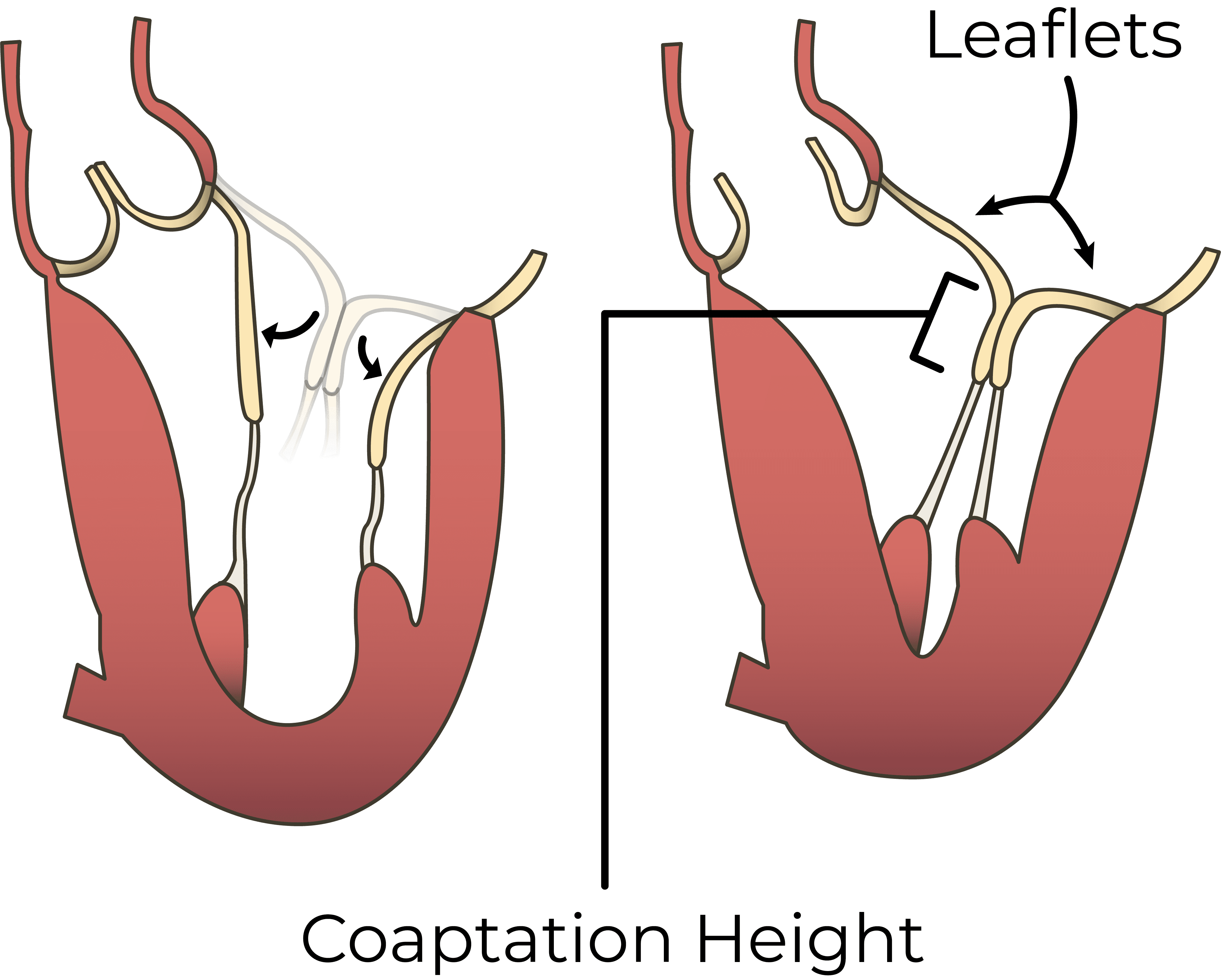
Mitral valve regurgitation is a type of heart disease in which the valve between the left heart chambers doesn't fully close, causing blood to leak backwards into the left atrium.
Fixing this condition requires surgical adjustment of the valve leaflets to improve the amount of leaflet tissue overlap, otherwise known as the coaptation height, to ensure that the valve can form a tight seal upon closure. However, there are currently no quantitative methods to measure coaptation height during surgery.
Solution
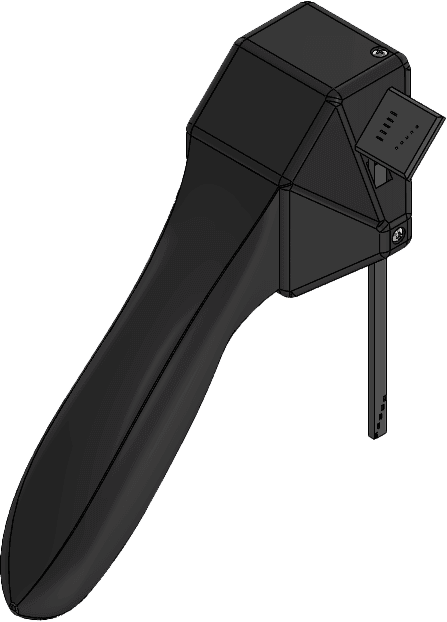
Develop a medical device that can provide real-time visualization and measurement of the mitral valve’s coaptation zone.

Impact
This work is a stepping stone to the development of the first fiber optic device intended to quantitatively assess mitral valve function.
The further development of this device could have major positive implications for the lives of millions suffering from heart valve disease worldwide. Because there is currently no comparable technology on the market, this device could contribute heavily to a larger system of improved quantification of valve function across the heart.
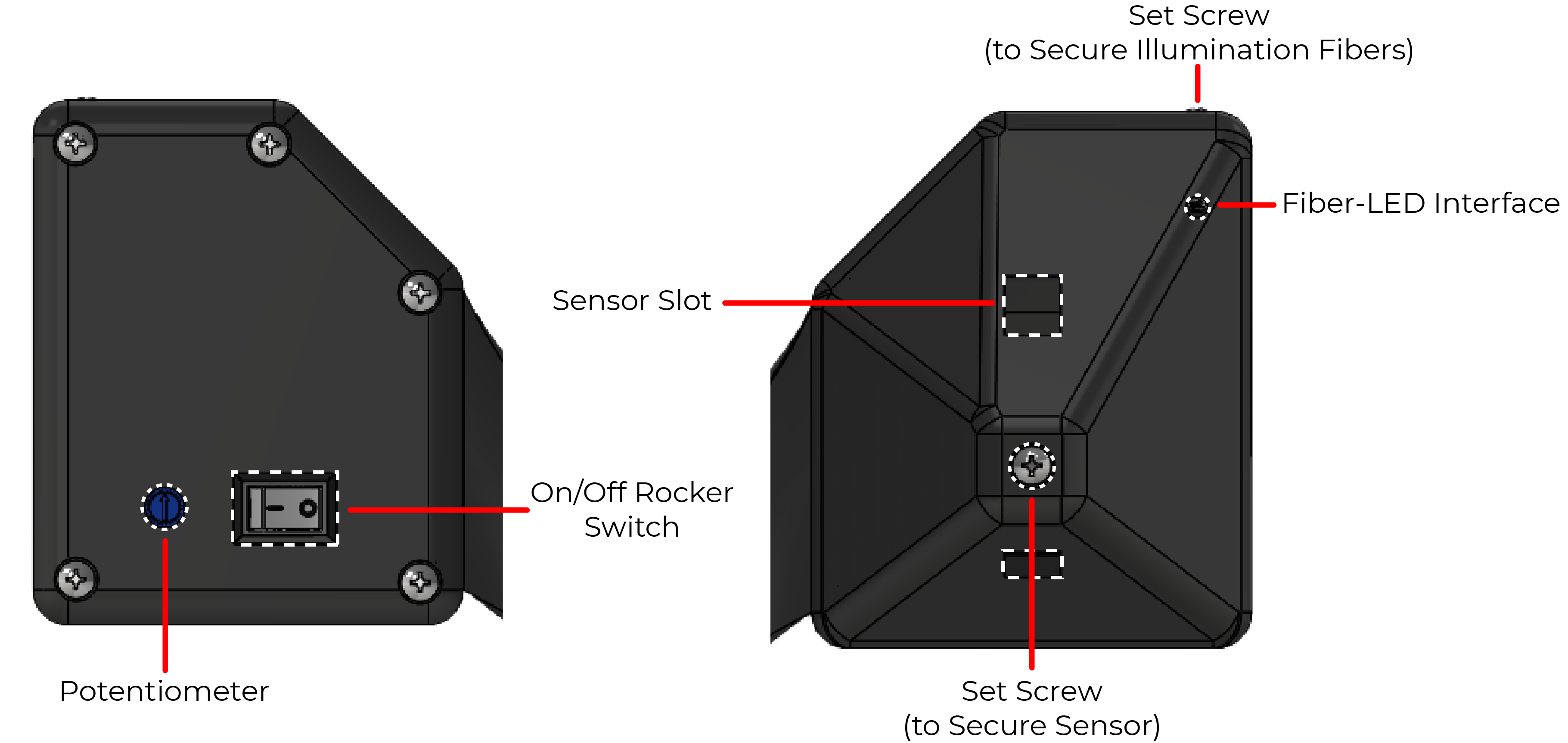
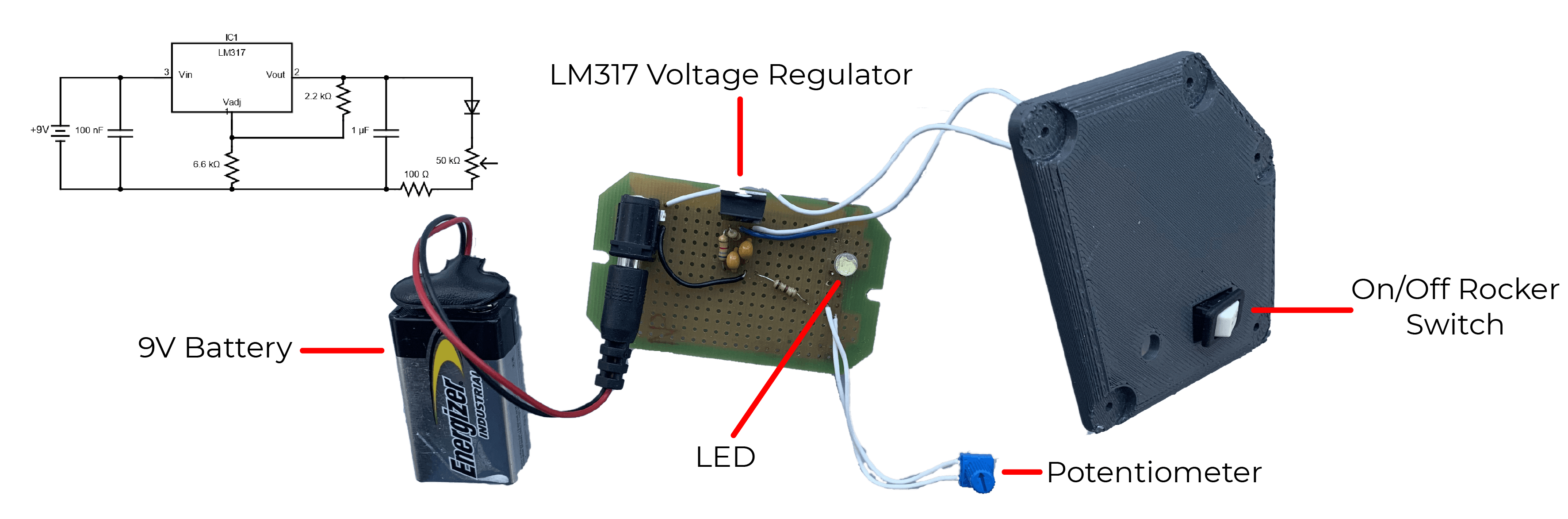
System Components
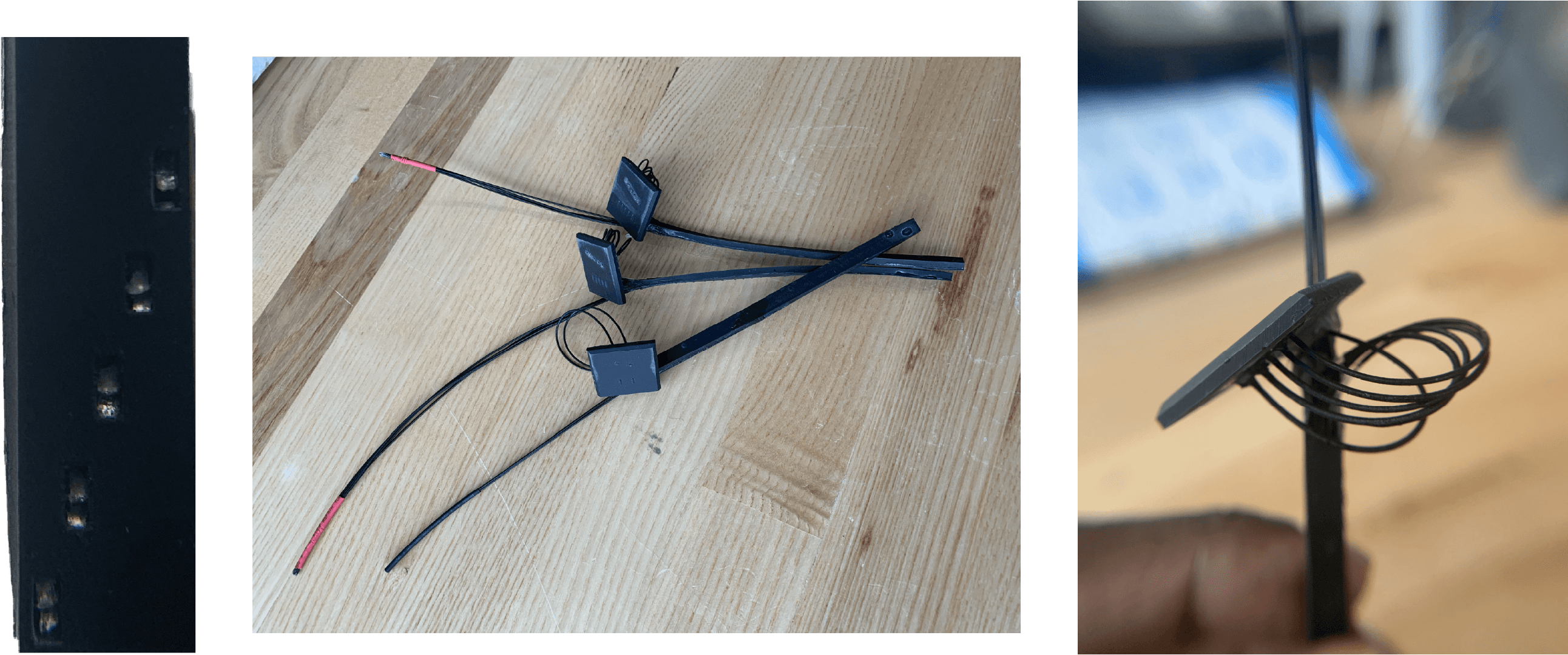
Build

How to Use
System Diagram

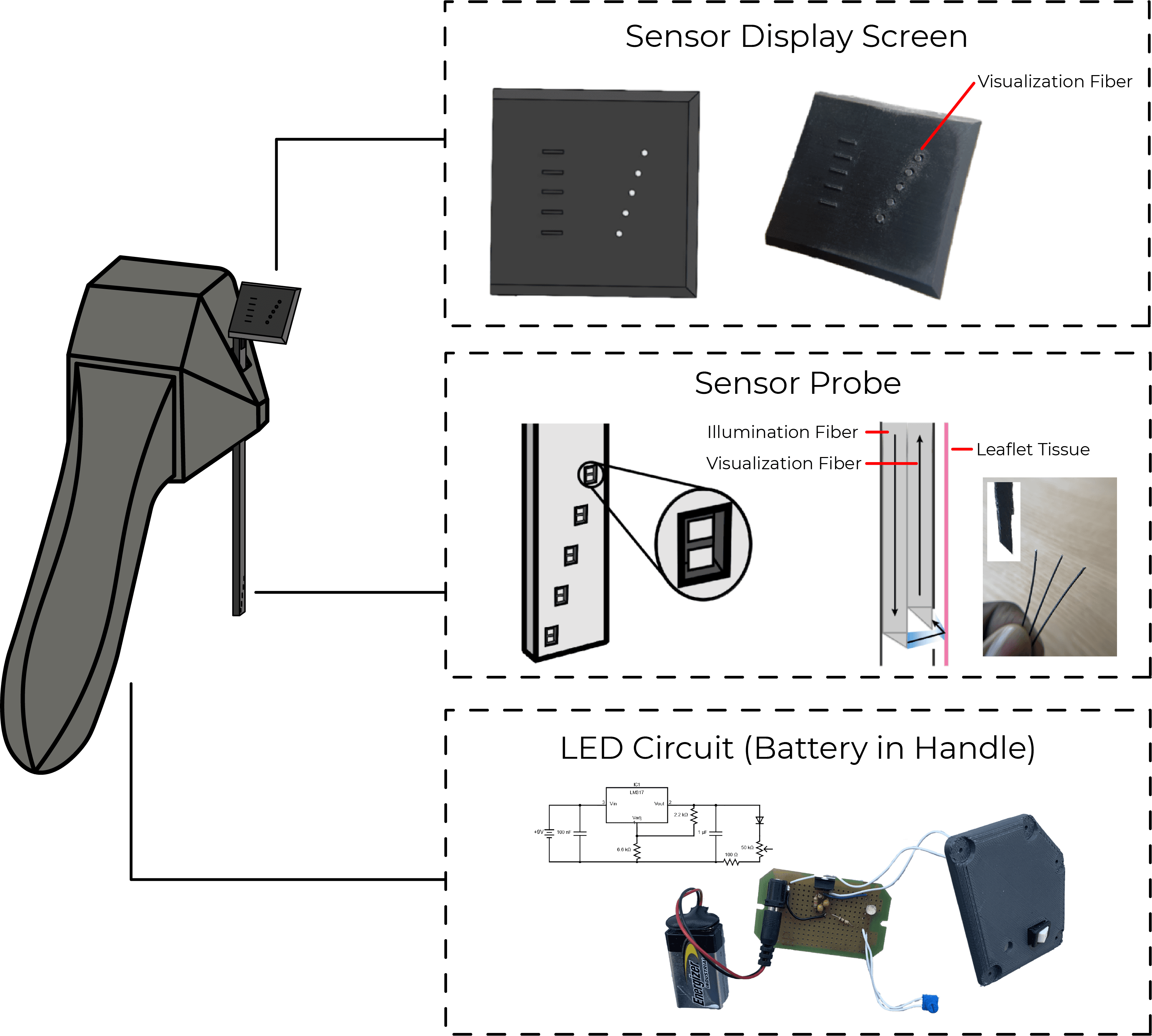
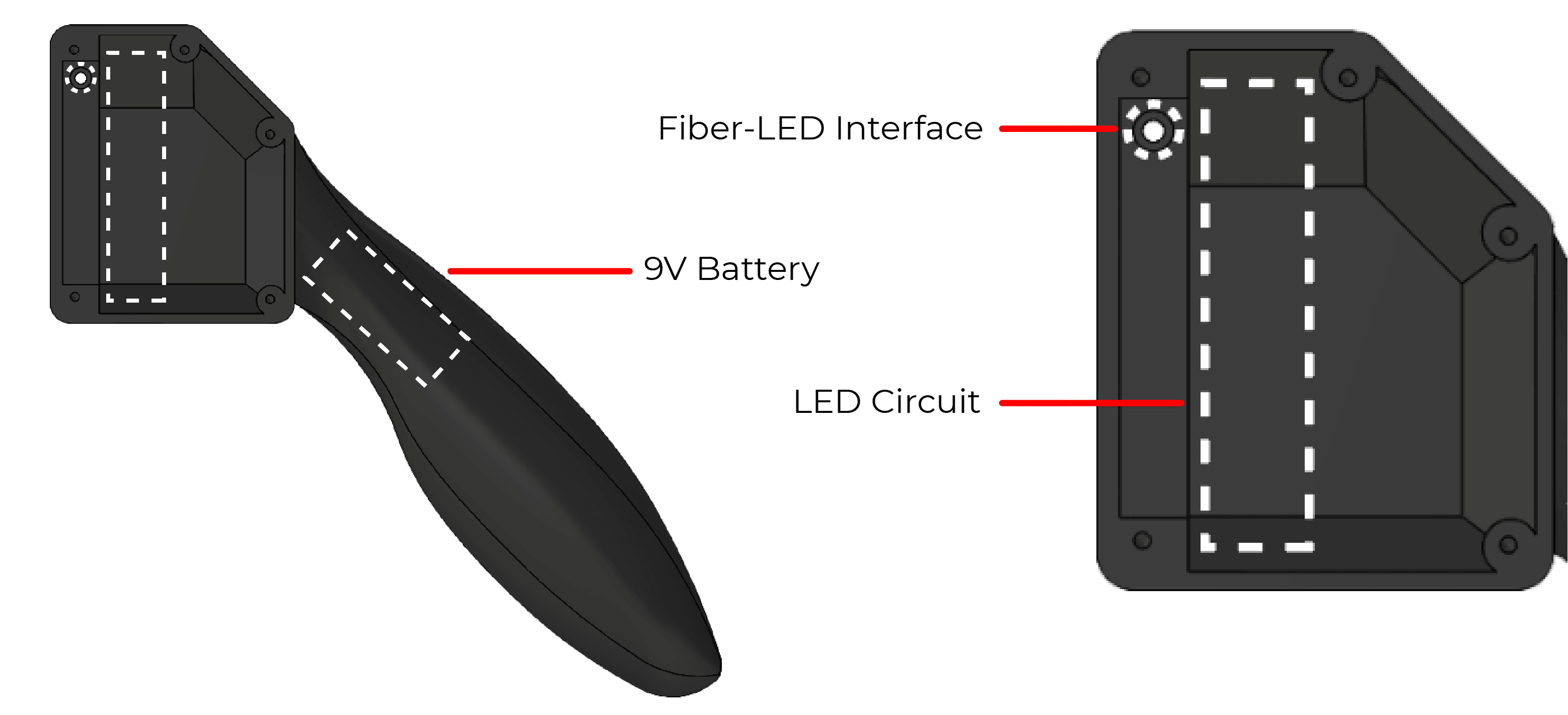
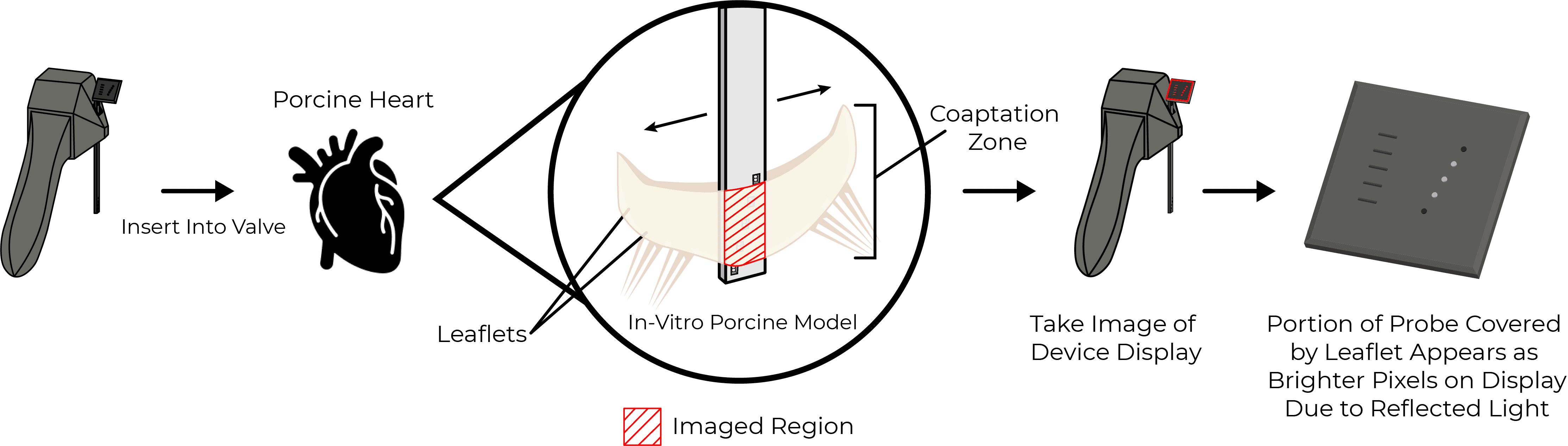
The LED will cause light to propagate down the illumination fibers of the sensor probe, which would be positioned between the leaflets of the mitral valve.
Light would then be reflected at an angle at the end of each fiber to allow for visualization of the leaflet and/or blood interfacing with the sensor.
After the light bounces off of the leaflet or blood, some of it would then be reflected back into the visualization fibers, where the light would propagate back through the fiber until it reaches the device’s visual readout and can be directly visualized.
An image of the device’s visual interface can be taken with a camera and used for data analysis.
Evaluation
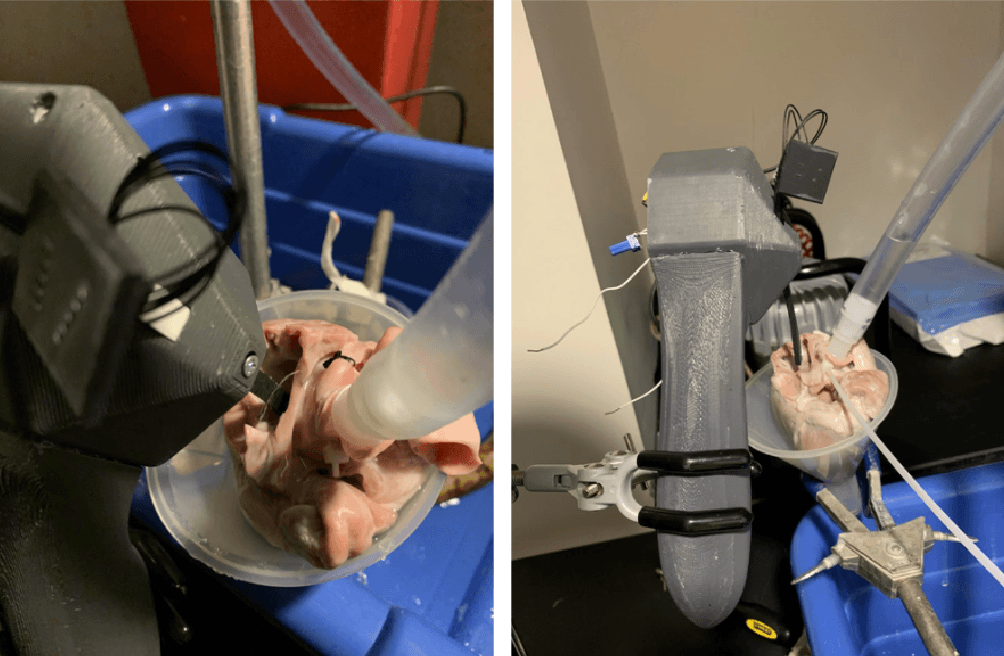
Prototype in porcine mitral valve
Future Work
Despite the device’s achievements, there is still much room for improvement.
The form factor of the main device body should be altered to better suit an operating room environment. This would primarily entail altering the handle to be angled upwards rather than downwards.
PMMA optical fibers should be replaced with glass optical fibers for better light transmission and decreased probe thickness.
The device should allow for the sensor to be secured without needing to use set screws.
Once the device is able to consistently measure coaptation height of one leaflet, the capability of the sensor should be expanded to allow for simultaneous bidirectional viewing of the coaptation region on both the anterior and posterior leaflet surfaces.
Next step is to further develop and integrate a MATLAB algorithm that can take in images of the anterior and posterior leaflet surfaces from the device and, through image processing, find upper and lower leaflet boundaries prior to creating a mapping of coaptation heights for the imaged region.
The current state of the software, which has been developed up to this point using mock leaflet images, can be found in Appendix C of the final report.
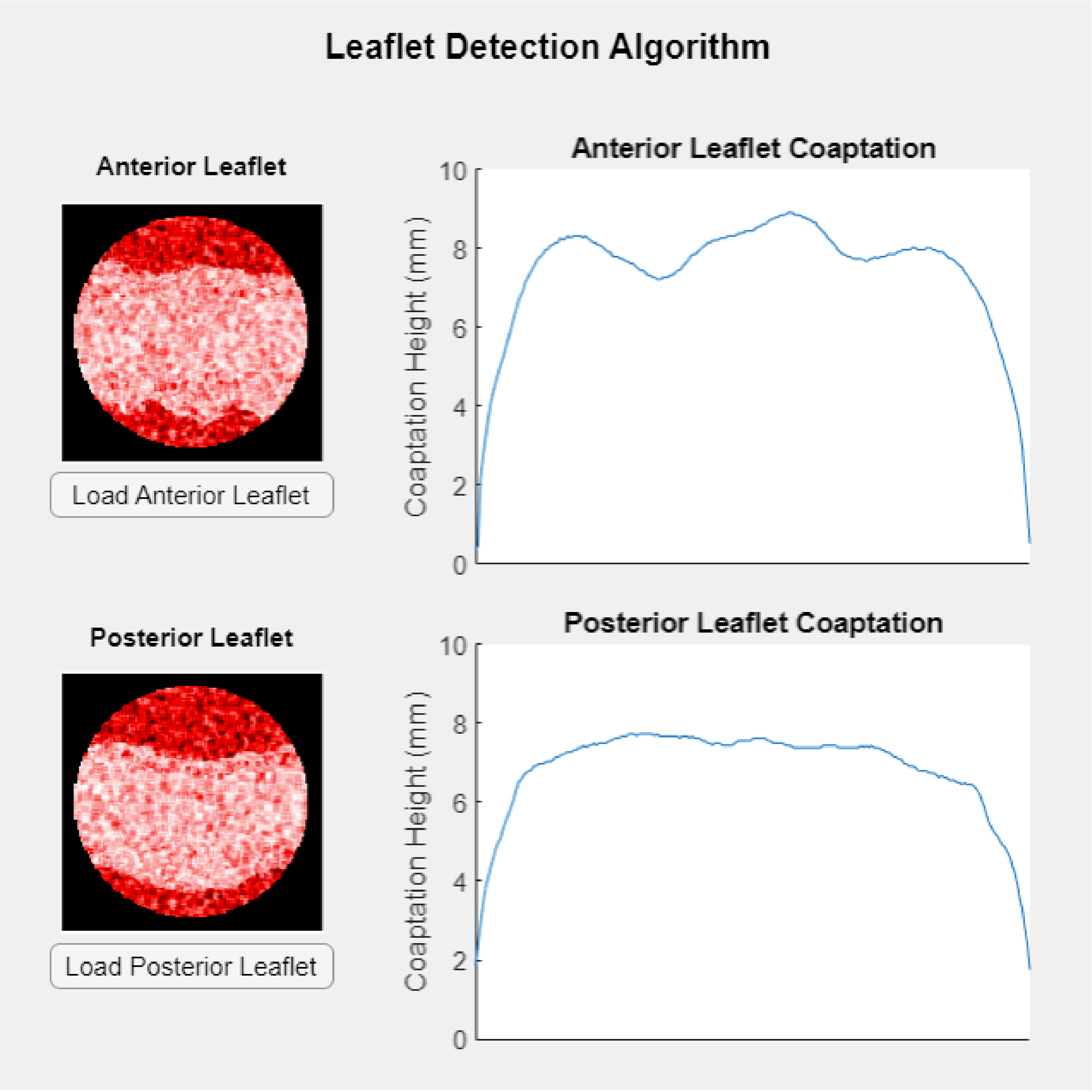
Proof-of-concept leaflet detection algorithm built in MATLAB
Full Text
For a full description of the ideation, design, build, and evaluation process, please refer to the full text below.