Physiological Neural Networks
Building a physical neural network as a basis for biosignal learning
AI
Medical Device
ROLE
Researcher
Problem
Deep-learning models are widely used in science and engineering applications; however, their energy requirements limit their scalability.
This research project examines the potential for physical neural networks (PNNs)—an emerging field of devices that allow for deep learning through layers of controllable physical systems—to be used to continually learn from, monitor, and treat disease.
Solution
Thorough literature review of state-of-research for each relevant topic area based on four core questions.
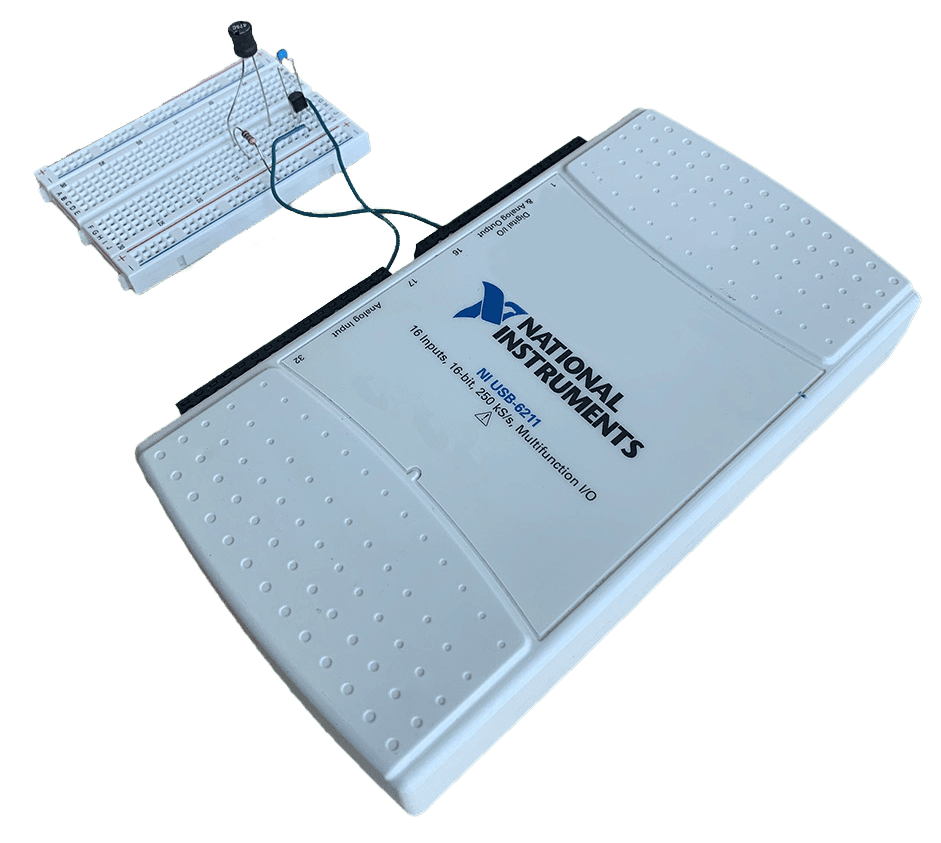
Specify, design, and fabricate an analog electronic circuit PNN using easily-sourced materials.
Build and run four virtual instruments in LabVIEW to validate function of the system with simulated signals.

Impact
Overall, this project represents the first work in which the application of PNNs in healthcare is investigated.
Long term, this technology shows promise in opening the door to more personalized medical devices that can treat patient-specific health conditions using data collected from a patient’s own body over time.
Core Research Questions
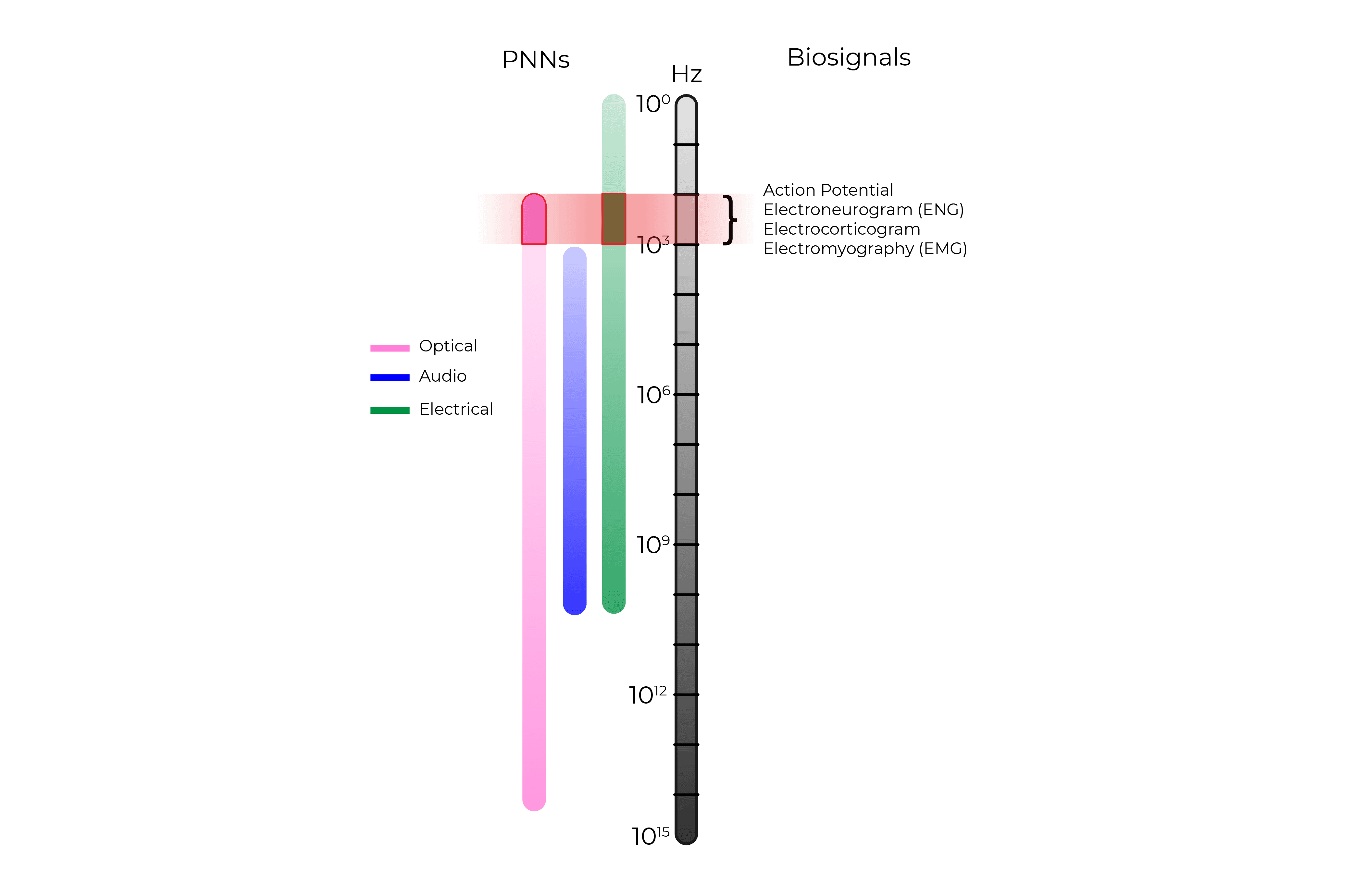
Takeaway: This subset of biosignals is best suited for continual learning using either an electrical or optical PNN approach.
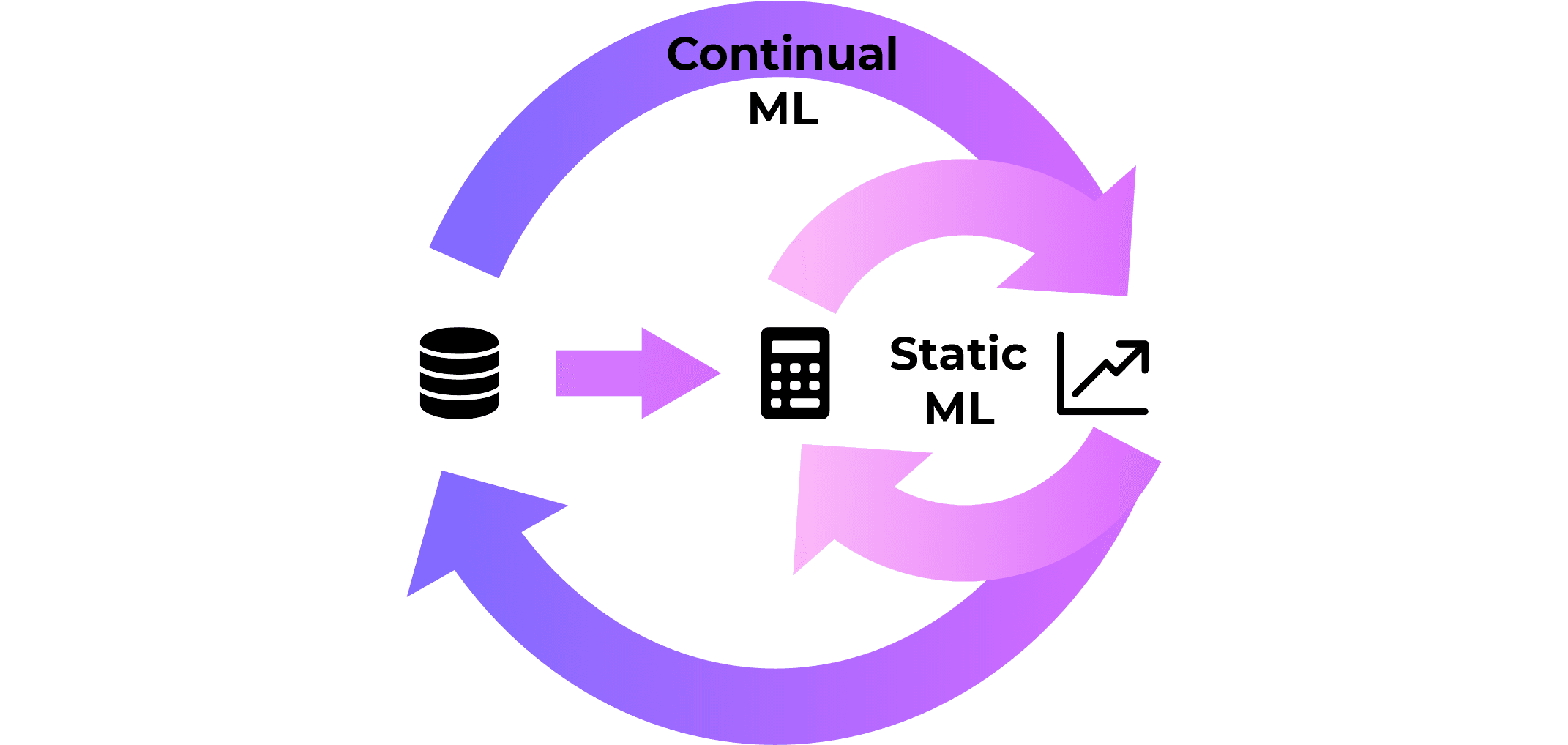
Takeaway: Continual updating of physically-controllable model seems feasible.
Implementing CL on PNNs could promote democratized accessibility.
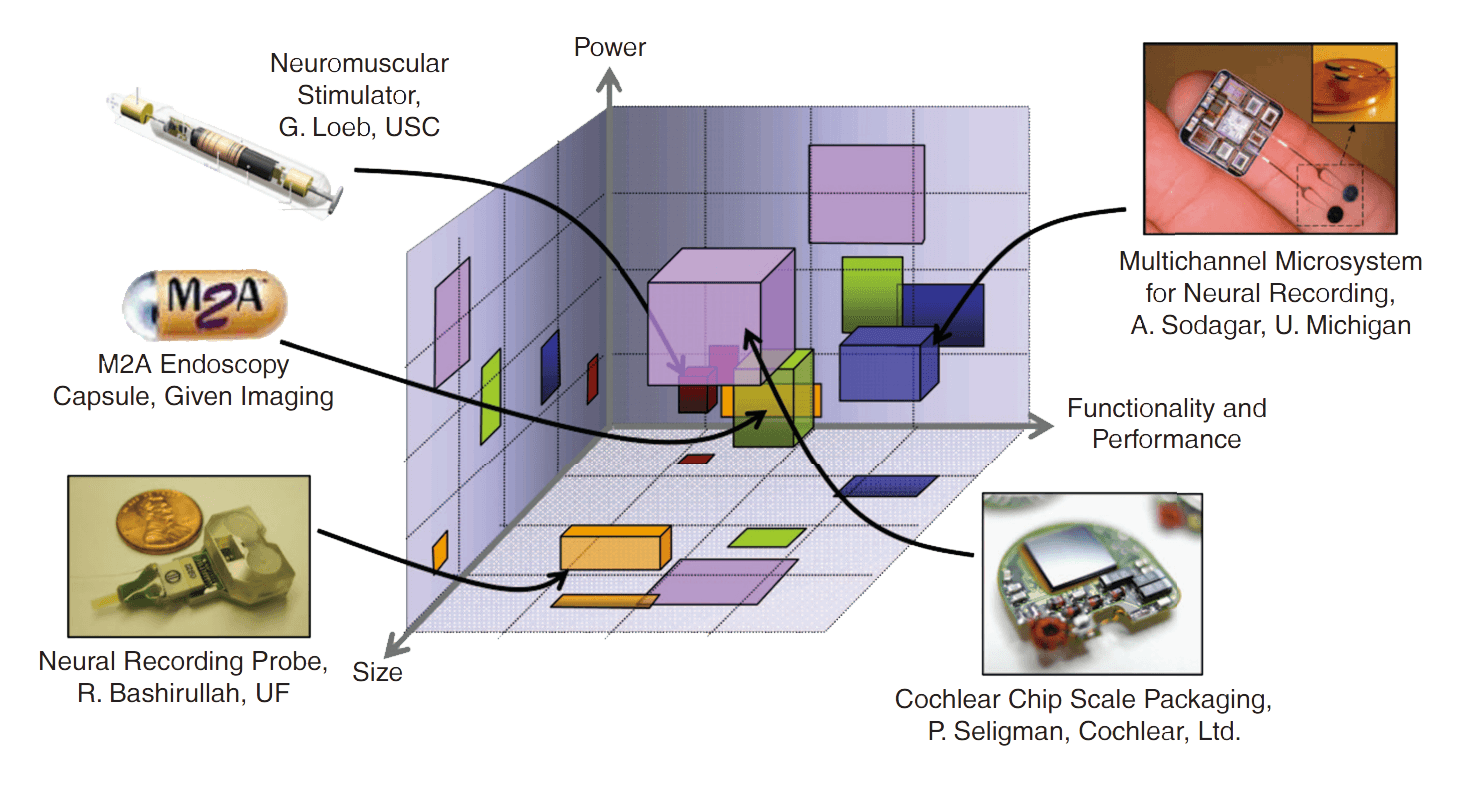
Takeaways: There are four areas to target when designing a device to be used in the body like this. For more information on each, view the full text.
Powering—Combining energy harvesting methods to collect more power.
Size and Form Factor—Device can be implantable, ingestible, or injectable.
Neural Network Performance—Deep compression can significantly decrease storage requirements of neural networks without compromising accuracy.
Biocompatibility—Using biocompatible materials, coatings, or using a steel jacket.
Takeaways: Artificial and real-world time-series datasets on wind power generation from European farms were used to show the effectiveness of continual learning using CLeaR (Continual Learning for Regression Tasks) framework.
From the findings of a study comparing CL with image classification versus time-series data, the accuracy of CL on time-varying data was shown to reach above 90%.

CLeaR: An Adaptive Continual Learning Framework for Regression Tasks
PNN Fabrication
Reverse-engineered the foundational Cornell/NTT Research paper to inform PNN design and code implementation.
Electronic PNN fits within desired frequency range of common biosignals.
Easily-sourced components.
System Evaluation in LabVIEW
To evaluate the system, I built four virtual instruments (VIs) in LabVIEW; the results from all of them are in the full text, but this non-regenerative continuous analog output VI is the most physiologically-relevant one, as it is most useful for simulating signals that change over time.
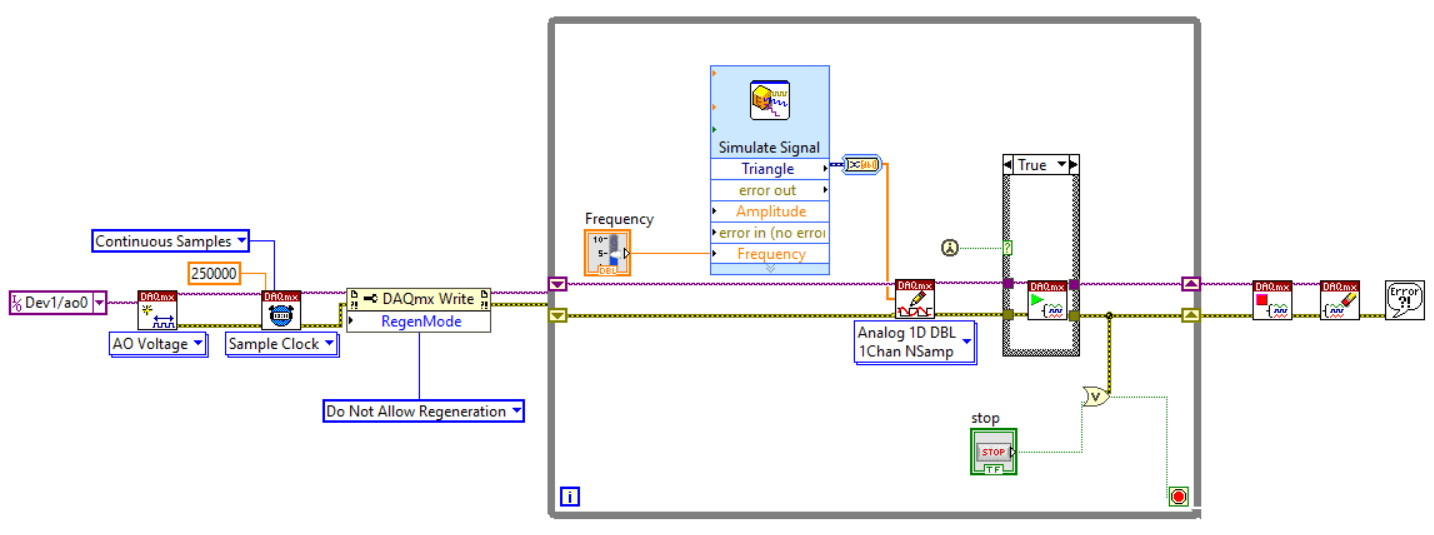
Block diagram
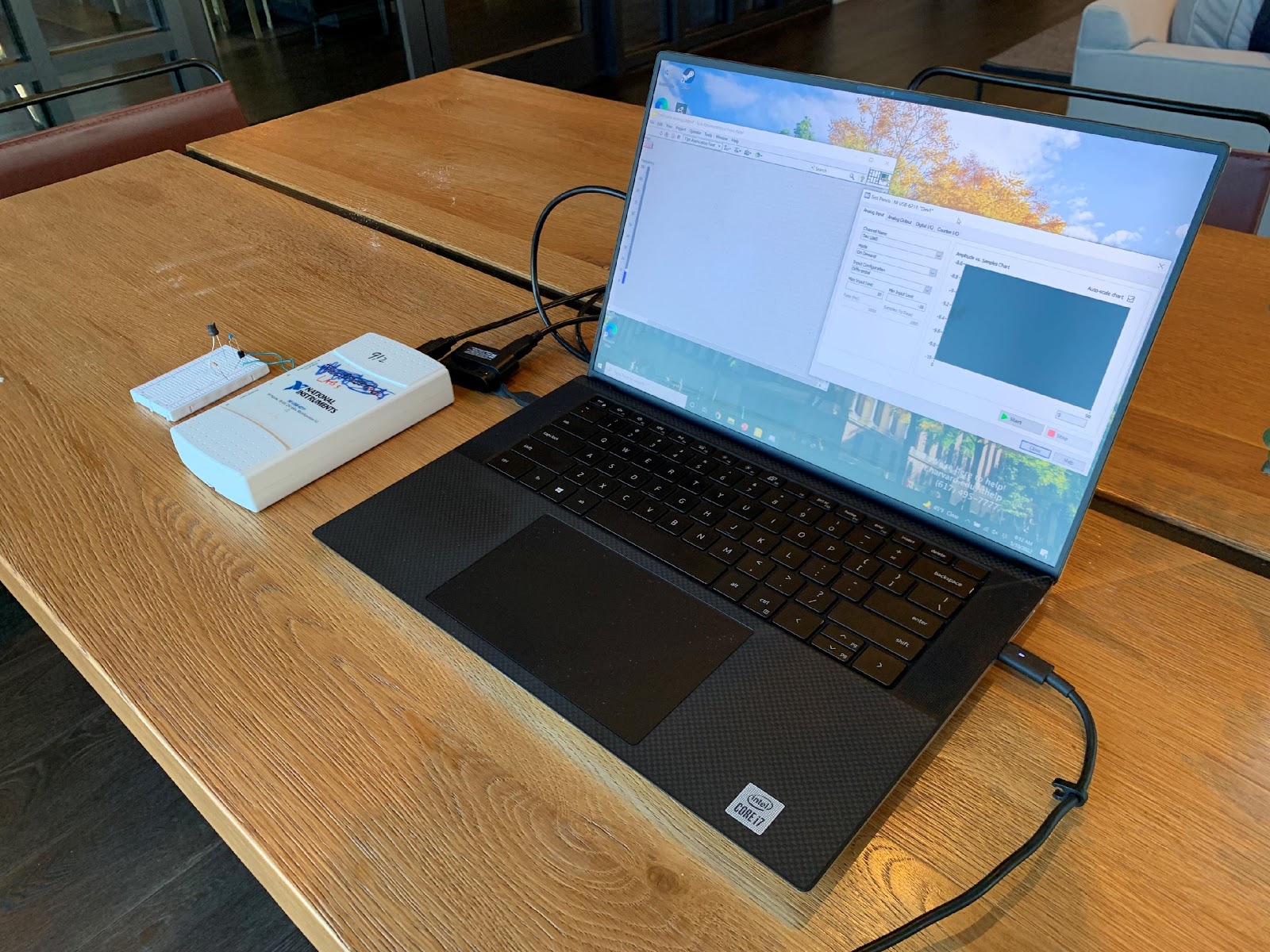
Test setup
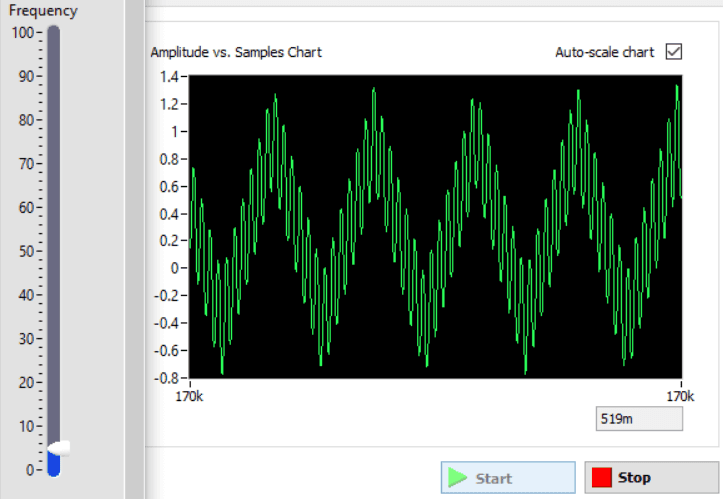
System response to simulated signal – 5Hz
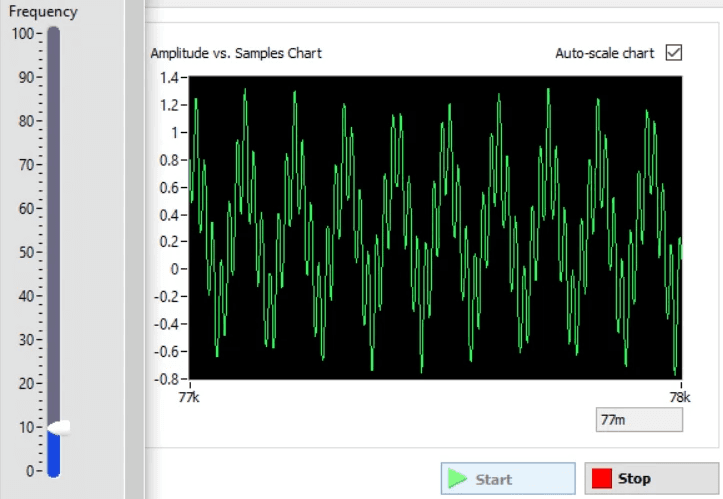
System response to simulated signal – 10Hz
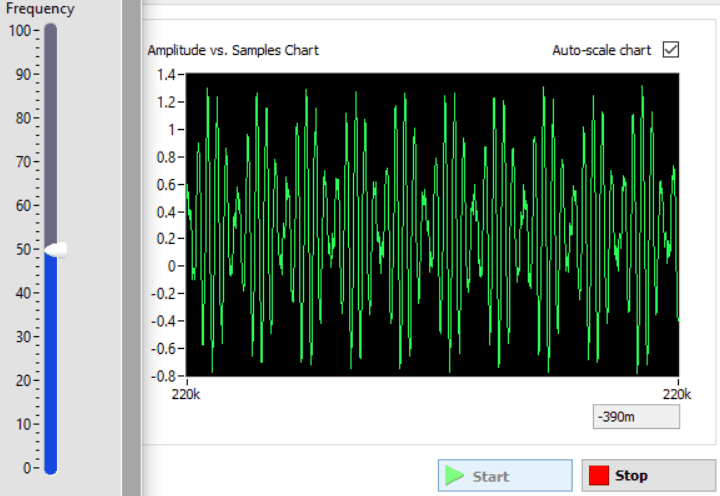
System response to simulated signal – 50Hz
Frequency of simulated signal was adjusted throughout testing with the slider on the left.
The system output changes as the simulated signal (triangle wave) travels through the circuit. The nonlinear response is expected because of the structure of the circuit, and in the foundational paper, more nonlinearity is desired since the nonlinear response would lead to the model being able to learn and address a much wider array of problems.
Full Text
For the full literature review, design, build, and evaluation process, please refer to the full text below.